Limagrains forage crop manager John Spence says the extra energy from a grass reseed has a high value. Dry matter yield from a grass sward can decrease by about 5 tonnes/ha from year 1 to year 4; this is a drop of energy worth more than 3,200 in milk value at current prices.
The well-known decline in grass sward yield and feed value over time is highlighted in Limagrains published trial results, along with the wide range in the performance of grass seed mixtures.
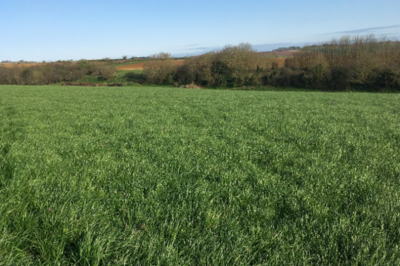
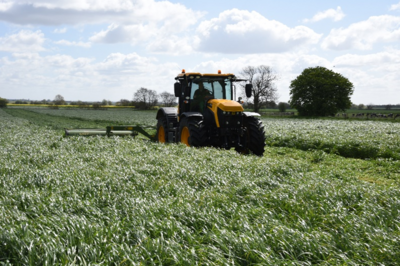
The four-year trial, carried out at our innovation site from 2017 to 2020 monitored yield and feed value on more than 30 grass seed mixtures throughout the growing season, and not just in spring.
The results recorded a wide range in performance of mixtures, with one of the highest performers, Monarch Silage & Grazing, yielding 8% more dry matter than the control under conservation management and 12% more under grazing management. It also recorded added feed value with improved digestible fibre of 2.5% under grazing management and 4% in conservation systems, compared with the control.
While some mixtures showed greater performance that others, as anticipated, dry matter yields decreased across the board to the tune of nearly five tonnes per hectare around 40% from year one to year four. This loss has a price tag either from extra feed requirements, or less income from lower milk yields or weight gains.
Equated to milk value, five tonnes of dry matter per hectare would provide the energy for 3,280 worth of milk based on a milk price of 30ppl.
Reseeding is estimated to cost between 430 and 700 per hectare, depending on the cultivations needed, so the return on investment is obvious.
Good grassland management and quality mixtures will reduce the rate of decline, but the trend will still be there.
This confirms the clear wins to be had from a reseed, but also from the use of proven high value mixtures.